
Last Updated: 6 months ago
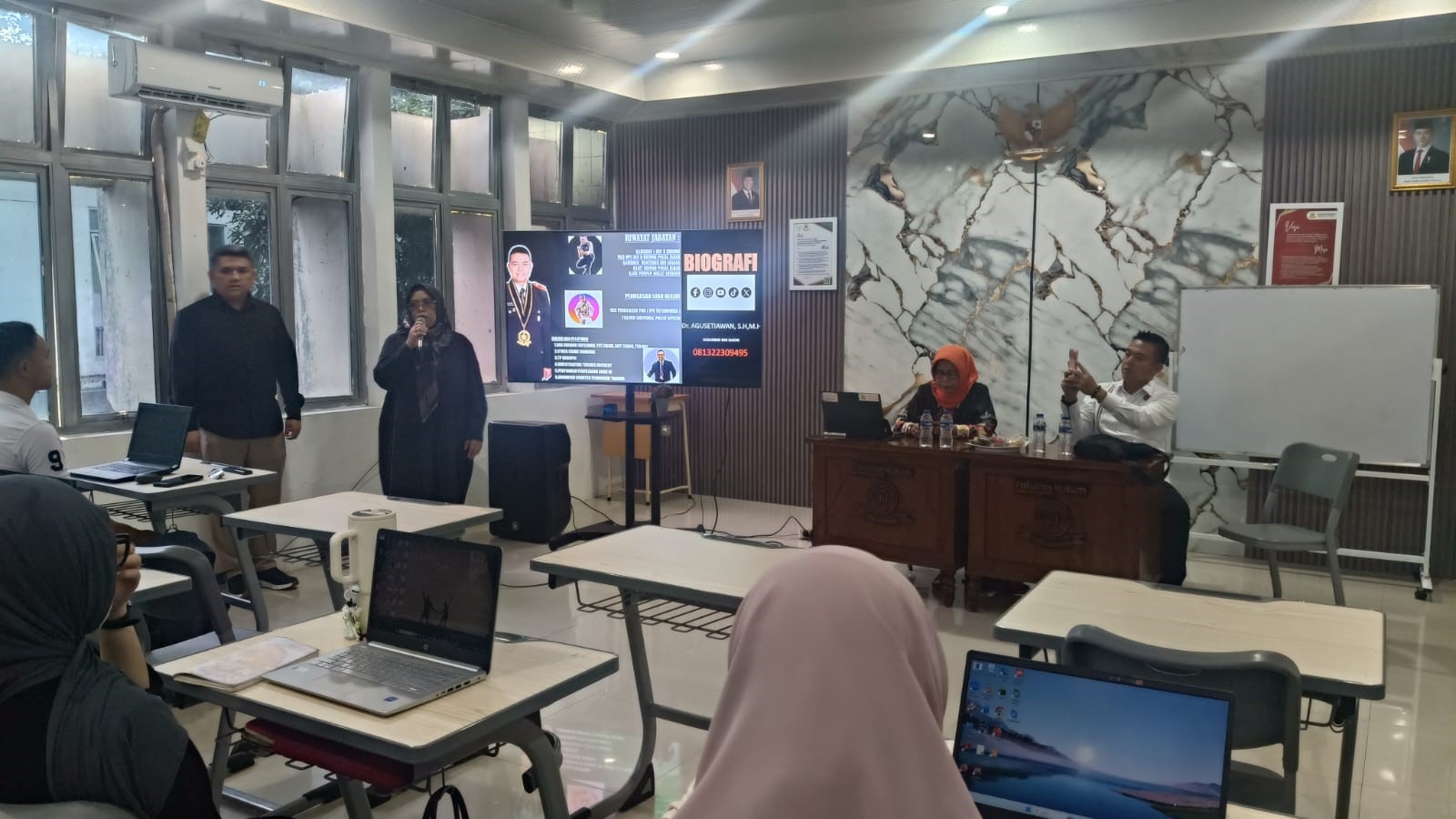
(Bogor, December 24, 2025) The Criminology course at the Faculty of Law, Djuanda University, offers a firsthand perspective from the field. Senior Commissioner of Police Dr. Agusetiawan, S.H., M.H., Head of the Teaching and Training Sub-Division of the National Police Research Education Center, served as a guest lecturer at the "Teaching Practitioners" event on Wednesday, December 24, 2025.
The event, attended by fifth-semester students, raised the theme "Investigative Strategies and Criminological Approaches in Handling Modern Crime." Senior Commissioner of Police Agusetiawan examined the development of criminal modus operandi, from cybercrime and transnational organized crime to investigative approaches based on criminological theories.
In his interactive presentation, as an experienced investigator handling various major cases, he emphasized that understanding criminology is not just theory. "Criminology is the foundation. In the field, theories about the causes of crime, perpetrator profiles, and victimology are directly translated into methods of investigation, inquiry, and even prevention efforts. The challenge now is that crime evolves with technology, so the approach must be holistic and adaptive," said AKBP Agusetiawan to the students.
He also shared a real-life case study (with identities disguised) that illustrated how criminological analysis helps uncover the motives and networks of perpetrators. The question-and-answer session was lively, with students enthusiastically asking questions about issues such as handling cybercrime, criminal psychology, and ethics in investigations.
Dean Appreciates Academic-Practitioner Collaboration
Welcoming this initiative, the Dean of the Faculty of Law, Djuanda University, Dr. Nurwati, S.H., M.H., emphasized the importance of synergy between academia and practice. "The direct presence of a practitioner like AKBP Dr. Agusetiawan is a very valuable bridge. He brings not only theory but also real-life experience that enriches students' understanding," said Dr. Nurwati in her remarks.
The Dean hopes this form of collaboration between academics and practitioners can continue as part of strengthening the quality of legal education. He emphasized that the developed curriculum is designed to be adaptive and responsive to the dynamics of the times. He believes that courses such as Criminology have strategic relevance in equipping students with a comprehensive understanding of the realities of crime and law enforcement. Through direct exposure from practitioners and stakeholders in the field of law enforcement, students are expected to become not only law graduates who master concepts and theories, but also possess practical readiness, social sensitivity, and analytical skills to address the complexity of legal and crime issues in society (FH2025).